Showing posts with label writing. Show all posts

Thursday, May 22, 2014

Fabio

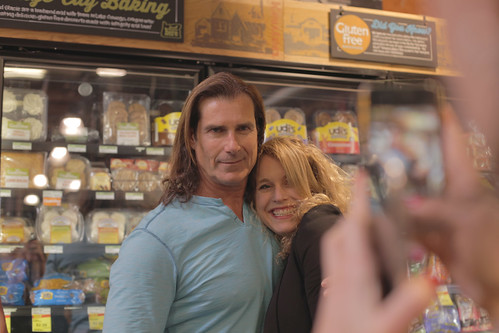
Fabio meets and greets


Fabio is in Portland this week, touring the local Whole Foods much to the delight of many women here. I went to the first event and wrote a story. Because: Why not?


Fabio, the Italian heartthrob known for his hunky physique and exquisite mane has parted ways with I Can't Believe It's Not Butter, the spread and spray he advertised in the 1990s.

But he is still catnip to some women, and in the sales world, they call that a sure thing.

He's on a nationwide tour of Whole Foods markets, selling Healthy Planet Nutrition protein powders. And, perhaps more importantly, he is posing for pictures. His first of several Portland appearances was Wednesday on Northeast Fremont Street. Thursday, he'll be at the grocery chain's Pearl District location. Later in the week, he's at the Tanasbourne, Hollywood and Laurelhurst locations.

Women once mobbed him. Cops had to break-up fights in the 1990s as fans fought for a piece of Fabio's 6-foot-3-inch frame, the cover image of countless romance novels.

But heartthrobs come bearded here. Butter is back in style. And the 40 women lining up Wednesday in the gluten free aisle did not seem the mobbing type. They were business women, literary types, and their smiles verged on embarrassed giggles as the clock ticked toward 12.

"We booked a group meeting in Outlook," Alyson Clair confessed. She and 40 coworkers at the apparel company Amer Sports have spent the last few years working alongside a bare-chested, boot-clad cardboard cutout of Fabio.

They bought the cutout for a Halloween party. Eight of the Amer Sports workers loved it so much, they cut out of work to meet the real deal.

"No dudes would come with us," Hart said.

Fabio was late Wednesday, so they posed for pictures with their replica. It's flat, but the sweat pictured dripping down the chest gives it a lustful, if not lifelike, quality.

"We're wondering if this is a no shoes, no shirts, no service kind of place," Kristin Normansen said. A passing Whole Foods worker stopped with an official word from on high: The grocery gods would let the 55-year-old Fabio remove his shirt.

When he did arrive, his tresses still extended to the ends of the earth -- or at least well past his shoulders. But his chest was not bare. Instead, he wore cowboy boots, snug-fitting jeans and a T-shirt tight enough to leave little to the imagination.

"Oh my god, his hair is flowing," Clair said.

"He looks good, so luscious," said Jessica Neciuk, a 22-year old on her lunch break. "He's beautiful. Everyone in my office made fun of me: 'He's twice your age.' But I don't care. I'm a sucker for long hair."

Fabio and an assistant set up in the frozen food aisle, a good 10 yards from the butter and butter substitutes. The assistant blended protein power into almond milk while our hunk talked chemistry.

"Your body is 60 percent water, 40 percent protein," he said before delving deep into something called the "biological value scale."

The Italian accent gave everything Fabio said an air of the profound. But after 10 minutes of scientific talk, giggles had sharpened to pursed lips.

Jocelyn McAuley and Kellie O'Donnell interrupted the lecture. They had raided their friends' costumes closets to assemble outfits befitting the cover of a romance novel and sneaked out of work to see Fabio. This was a bucket-list ambition; Mcauley's mother would be so jealous.


Yet as midday stretched into afternoon, they lost patience.

"I'm sorry, we have to go soon," Mcauley said. "Can we please get a picture?"

Fabio paused and furrowed his brow -- giving them the sexy stare of a book jacket bodice ripper. The romance cover replicas posed for their picture then rushed out, clutching their skirts in one hand and cell phones in the other.

"OK, if you come here, I explain you then we take the pictures," Fabio told the rest of the women. "Most of the world is confused right now. All these people, they give you a lot of bologna and very little science."

He held up a bottle of protein powder: The unpasteurized, sugarless mix is kosher and gluten free. It has high levels of lactoferrin, immunoglobulins and bovine serum albumin.

And it is delicious.

Well, at least more delicious than other protein drinks the women said they had tried. It was light and slightly frothy, they said, not too chalky or sweet.

Men suddenly appeared from the aisles to sip the chocolate and vanilla mixes from tiny paper cups. A lesbian said she was considering switching teams.

"Everybody thinks beans are such a great protein," Fabio said. "They are not. They are bottom of the scale. Even a potato has more protein. There is a lot of marketing and very little science."

At $32 for 10 ounces, his mix is expensive. But other protein powders supplement the good stuff with sugar and chemicals, he said.

"Give the people the right thing, and it will be right forever," he said.

They bought the powder, but in this case, the right thing turned out to be pictures.

-- Casey Parks

Sunday, May 18, 2014

There are some things you will never do. It doesn't matter. There is no rush.

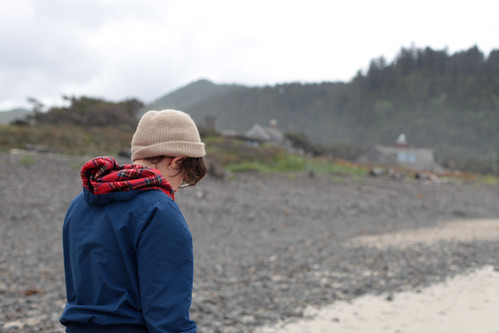
Me, photo by CW


You said I’d be terrifying at 30.

A badass version of me was hard to imagine at 24, when I knew I’d stay strutting in my Converse, polite-talking my way through everything forever. But I wanted to believe you could be right, so I waited through those awkward 20s, hoping every turn would turn me there.

I ticked off “Saturn Return” in 2011. I told myself the cosmos was to blame for the breakup and the death and my every-day-a-new-indecision ways. If that year was my upending, that meant I had smooth sailing, steady sequences waiting for me after. This is just a stop you make, I told myself. Just wait three years.

But 30 held its own upheavals. Only a month in, The Oregonian laid me off. I don’t think all the crying and gulping for breath held any real brainwaves that night, but I do remember staring out at nothing thinking this is not how 30 goes for me. This is the year I’m supposed to become terrifyingly good.

The bosses changed their minds, took back the axe and the severance package, too. But it never felt like rewind for me. If I was terrifying, it was because I was hurt and scared that the thing I had spent my whole life becoming would not exist any more. At least not for me.

I spent most of the year stubborn and mean. The layoffs gave way to musical chairs at work. The polite-talking sneaker wearer I used to be found a desk somewhere away from me. I accused everyone of being out to get me. I scrutinized my paycheck, marked every moment beyond hour 40.

“I swear all my other year-end reviews said I was a pleasure,” I told my new boss. “I know you haven’t seen me be a pleasure. But I was a pleasure before.”

I moved out of the apartment where I had spent most of my 20s. I took up with three cats and the most exquisite girl. I wrote the stories I wanted to write. I spent many Saturday nights reading.

I put one foot in front of the other. I stopped spending every moment thinking of the future. I spent some part of every workday working on the three stories I really cared about. I finally realized that great writing has little to do with being a phenom. It is not divine intervention or being in the mood for the best of clauses. It is hard work, showing up and going through the motions when your brain feels like numbing through a marathon of Bejeweled.

Eventually everything settled. I stopped waking up in the middle of the night unsure of myself. I took up running. I bought that woman a ring. My Big Speech dissolved to nonsense in the moment (I do believe I said “We had a nice Thanksgiving”), but she said yes.

That is, as the year wound its way it way to 31, I started to feel -- just slightly -- like an adult. And that’s terrifying. For me, if not for you.

Monday, February 10, 2014

The Important Matter of Small-Town Hair


The first thing she saw at Jitney Jungle was Mary Thompson’s bouffant, fresh from a foreign salon. The local barber didn’t do that kind of up-do. Louise kept her shock cropped in electric spokes, and every other mother on Chatham Street had a perm or a bob, nothing as wild as the high-rising twist Mary was now wearing. Just last month she had been no better than anyone else.

“Louise,” Mary called. “Oh, Louise, isn’t it splendid to run into each other here. Frank and I have been out of town all month. We were in Florida, and you’ll have to forgive my hair. I had to have it done on vacation. The style isn’t quite taking to this humidity. Frank says it’s the same there as it is here, but I say the whole world knows Louisiana is hotter than hell. And how is Troyce?”

“Oh, we’re fine,” Louise said. The last thing she was going to do was discuss her husband or Florida or the merits and drawbacks of humidity with this hairstyle. Not when she had business in town.

Mary said, “I heard about what the preacher did. Troyce must be so hurt.”

“He’s the same as always,” Louise said. “In fact, we are going on a trip ourselves. Troyce has said he will carry me to Oregon.”

Louise could push her buggy all the way to Oregon right this second, but the outline of Mary’s bouffant would still flicker before her. Some women have so little to worry about.

“Oregon,” Mary said. “Well, who would have guessed?”

“Troyce stopped there before Korea, said it’s the most beautiful place in the world,” Louise said. Though, now that she thought of it, Troyce might have said Washington.

“I don’t know about Oregon. We’re not so well traveled as that. But Florida has oranges. And it has the ocean and the most wonderful people. Everyone is just radiant. Even Frank had a shine there. It could really set Troyce right, too.”

Louise pushed her buggy back and forth, just a bit. Maybe he had said Washington. He said the place was green even in winter. That trees there never died. You could mow the lawn in broad daylight there, Troyce had said, and never break a sweat.

Mary said, “Well, I’m sure you have to get going. I bet you have a huge supper planned.”

“Actually,” Louise said. “I’m headed to town today. To the Montgomery Ward. My mother needs a new rug.”

“I was just telling Frank the right rug can really tie a house together. Of course Frank wants to hold out for carpet. His mother has had wall-to-wall since 1962.”

Louise looked at her watch.

“Well, don’t let me keep you. Do tell Troyce we’re sorry we haven’t been by the store. Of course we don’t agree with the pastor, but Frank says we have to listen to him anyhow. Word could get around, and then Frank might run out of business, too.”

Louise wondered if they made women this same way in Oregon. Troyce hadn’t mentioned the women. He hadn’t mentioned the women of Korea either, though more than one wife in town had lost their husband to a Korean. Troyce had come home, thank god, with not a word of a single woman. In Oregon, she bet, women knew the right time to shut up.


-- excerpted from my short story "A New Rug"

(title cribbed from a Rachel Kushner line)
(photo grabbed from historical documents)

Saturday, October 12, 2013

You feel like a hundred times yourself

Milan and Olga

I've been wanting to try some writing exercises, so my new hobby is finding old photographs and trying to write a story based off them. Here's my first attempt.


Milan came back too tall for his mother. Twenty-two years old, but those last six inches -- grown while he was away at school becoming an accountant, "a man, ma, with real prospects" -- made him seem a good decade older than the boy she had reluctantly let leave. He had grown a mustache, just like his piece of shit father had worn when she met him outside the 5-and-Dime. And Milan wore a suit, which his father had never once done, not even at his own funeral. He had insisted he be buried in the outfit he wore every day, white t-shirt, Dickies Bib overalls. "But will the neighbors think?" she had asked. "They'll say that Olga didn't even keep enough for a burial. They'll say we're immigrants."

"We are immigrants," he said then turned on his heels, pushed through to the yard. The screen door's slap told her it was done.

Milan hadn't come for the funeral. Too many classes, he had said. But he sent a card and a dying bouquet of peonies. No one asked about him at the funeral. His father's get-up was story enough. But two years later, here her boy stood. This time, the peonies were still alive.

"So," Olga said. "Tell me about the girl."

Friday, September 20, 2013

Humming helicopters through the blades of a fan

Riding the 17 home: This bus is stone-cold quiet most hours, but PSU's classes empty right into the bus every run between noon and 3 p.m. The 1:30 is jostling already with girls comparing shoes and nail polish, girls who will get off at the mall or the parents' homes in Alameda, but the bus driver has something to say, too. "It's time for class," he says. "The bus is moving."

We break into the street and he points to the courthouse. "You want to stop at Main if you're interested in the justice system or if you have business with the justice system," he said. He points out Pioneer Square, and it sounds like he's telling its history, but he has no microphone. He's no match for the churn and exhale of the engine. The next time I can make him out, we're stopped.

"Burnside is a great connector," he said. "You can go to Beaverton or Gresham, but we'll wait here with a view of Northwest Portland."

"And now the bus is moving."

A woman in hijab is face-timing, but she snakes an earphone out from her scarf to hear the man in front of her. He's looking, pointing to her head.

"It's 80 degrees. Aren't you hot?"

"No," she says, then turns back to her phone with an eye roll.

"I'm just saying it's hot," he says.

The college girls talking boys switch to singing to overcome the engine and the lurker. But no landmark goes unmentioned from the front. The grey house bus station and the I-5 overpass are as important as the place where NBA stars shoot. We're two miles from industry, he says. We are above the Willamette River. Six buses cross the intersection of MLK and Broadway, he says, and you can walk to any of them.

The bus is moving.

"We have crossed into Northeast," the driver said. "Everyone has their own preference, but if you're still on this bus, you probably like Northeast. I do, too."

Thursday, September 12, 2013

How I learned I can't do everything

The second- or third-worst thing about heartache was the jars. For years, I hadn't opened one myself. I'd feign a twist then a grimace then hand it off to my girlfriend. Pop. They always opened on her first grab.

The first week without her, I wrung and clawed at a jar of spaghetti sauce. I used a spoon for leverage then rifled through my drawers, hoping to find that circle of friction my mother gave me when I moved west. "So you can get into mayonnaise," she said. That circle was missing now. I ate the spaghetti with butter and salt instead.

I had nothing to do with my nights, so I hired a personal trainer. "What's your fitness goal?" he asked. "I want to be able to open my own jars," I said.

He laughed. "Let's start with some pull-ups," he said.

Afterward, I used a can-opener to pry open some pickles. I slapped the spaghetti sauce against the floor. I looked again for that circle. I found it wedged behind the spatulas, hung over the back of the drawer. I wrenched it around the sauce lid. It stayed stuck.

My trainer taught me to squat 100 times in a row. He taught me to bench-press 45 and stand flamingo on one leg for a solid minute. After two months, I could do push-ups and 12 kinds of crunches. I could not open a jar.

I made do with can openers, using them like beer bottle openers to relieve the pressure from the lids. I asked a neighbor for help once. I was sheepish, but starving.

By the time I met my next girlfriend, I had forgotten the ease with which my ex had popped lids. My ways were messy, but they worked. Besides, I was an independent woman. I would not lose another relationship to dependence. I made my own money, popped my own lids. I take out the trash like the chore does not offend me. I wash the dishes as soon as I eat.

So when my new girl handed me a jar to open, I reached for the can opener, no shame.

"Oh, your tiny hands," she said, catching me in the act. "I bet you just can't get any leverage."

Tuesday, September 10, 2013

Summer on its last burnished legs

Roosevelt High School footbal

Roosevelt High School football game

Roosevelt High School football game

Roosevelt High School football game

"He's messing up the snaps," the quarterback said. One of the dozen assistant coaches pulled the center away from the huddle, tossed him the ball. "Let me see you snap," he said.

The teenager tossed the ball through his legs. The coach caught it, pitched it back.

"Again."

They passed the ball back and forth 10 times, then the coach held it.

"Man," he said. "Are you hitting yourself in the nuts?"

The teen -- a lumbering 245-pounder -- kept one hand on the astroturf as he nodded.

"Man, that should be your No. 1 goal. Just keep thinking it, 'Do not hit myself in the nuts.'"

The practice paused as the other team flew into the endzone for touchdown number three. The game looked lost. The coach caught the center's eye and passed the ball back. "This isn't the only game," he said. "It's just the first game."

The boy snapped again, just a little lower. It sailed clear and easy. A perfect snap. Something to show off next week.

Saturday, June 22, 2013

and I don't mind racing through our goodbyes

My living room needs some art.Untitled

I've never felt at home anywhere the way I do in this apartment. When I was young, we changed houses the way some people change bedsheets. I imagined nothing different for my life when I signed a rental agreement for this 1909, wood-floored, big-windowed apartment. In three years, I'll be out of here, I thought. II stayed six, and though I'm sitting on the floor now, with Lafayette smelling every box as I type, I am finally leaving.

This is where I learned to take pictures, where we kissed the first time. It's where I said goodbye over and over again. I stocked my first shelves here with a bottle of Pimms and a tin of cumin. That first year, I bought a new spice with every paycheck. I made only $7.80 an hour, but when I saved enough, sometimes I bought a bottle of whiskey. I fell asleep to the rumble of buses and motorcycles, woke up to my cat chirping at birds. I watched at least eight cars crash into the tree outside.

I stacked my books two deep on every shelf, kept a string of Christmas lights hung across the window for all but the first six months. I lined the walls with snapshots and kept my nicest bowls in the liquor cabinet, filled with cat treats. After you left your aloe vera here in 2008, I let it die then brought it back to life again. I think that happened a few times, but eventually, I learned to keep a plant (or 20) alive without any Lazarus-like miracles.

This is where I held the Monday night dinners, the annual Valentine's party. This is where we danced and collapsed, where I grew too old to party anymore. This is where you said to me, so devastatingly in 2007, "It's a nice place for a 24-year-old."

It was a nice place for any age, except for those days when it wasn't -- when the ceiling leaked for two years, when the hot water went out every week, when silverfish darted underneath midnight steps to the bathroom. It was too hot in the summer, too hot in the winter, but I never tired of the view. The rounded arch moldings reminded me of jazz when I toured the apartment, and I dreamed I could become a great writer here. I never became great, but I won't hold it against the molding.

My new place is one mile north. It doesn't have the view of the Fremont bridge or the totally uncomfortable fire escape. It doesn't have my neighbors, Amy and Milan, whom I've spent half a decade getting to know in the two feet of hallway between our doors. But it has two more cats, a big backyard and a girlfriend who knew exactly all the right things to say to me on one of the worst days of my entire life. That is, it has everything I need, here at 30. I unpacked my shoes and my books first. It's already home.

Monday, May 20, 2013

Front-seat freestyle

An essay I wrote a few year's ago is on the Dossier Journal Website now.


Down at Portland’s Central Precinct, down three floors, three cops sit slack-jawed staring at the biggest flat screen TV I have ever seen. A deep TV narrator voice says, “Lil’ Rick’s crippin’ had gone too far. The balancing act was torture.”

It’s 10 til four, and the cops lounge around a long table, the kind we use at work for important meetings. Lil’ Rick is a man now, but on the History Channel, he’s still a Los Angeles teenager wielding big guns and blue handkerchiefs. Being a Crip, he says, meant hating everything red — even strawberry soda.

I’m here for a ride-along with Officer Chad Stensgaard — a cop who spent a day in court last month after parking in a no-parking zone to eat dinner and watch the Blazers game. I’m a newspaper reporter, new to the night cops beat after spending a few years writing about education. Tonight, Chad’s going to take me through the dilapidated part of downtown known as Old Town, show me how the crack addicts have migrated north again. Two years ago, the police chief had declared victory: The big raid had sent 158 dealers or users to jail. Crack was gone.

“It just went downtown for a few years,” Chad says, handing over a bullet-proof vest. “Now we’ve been policing downtown, so it’s moved back here.”

I put on the vest. It’s extra-large, the only size they have. I just topped 110, and the vest hangs off with arm holes so big I could step through them.

Chad is young, studly with a spikey handsome-man haircut. He spends the first hour rolling slowly through the streets, coolly telling me about this or that time he arrested someone. He drives by a hair salon twice, tells me his wife works there. The shop is part of the new, remodeled plaza that city officials had said would turn Old Town around. It’s upscale, but close enough to the downscale area that Chad likes to check in on his wife. The car windows are down, and Chad says a police-like “Hello” to nearly everyone we pass. People are quick to greet him back, as if an officer’s hello mandates a respectful reply. “Good evening, officer.”

It’s 5:30, a Thursday night in the middle of June. Nothing is going on yet. I only have a few hours, and I feel impatient for some kind of action, something I can go back to work and write down so my bosses will think I’m a go-getter. I’m the youngest person on staff, and I want to stop feeling like I’ll never catch up to the other reporters.

“The commander thought I could use some good publicity,” Chad tells me. “That’s why I agreed to take a reporter with me tonight.”

I’m not sure what to say back to him, so I don’t say anything. Chad turns the radio on — the pop station, not the police scanner — and sings softly as he drives. I look out the window, wondering what people think when they see me in the passenger seat. After half an hour, Chad jerks the car into an old Burger King parking lot. Someone burned the insides out long ago. The sign is gone, but its essential Burger Kingness — the drive-through, the mission-tile roof — is intact. I try not to smile. Maybe this will be something.

Read the rest on Dossier.

Tuesday, May 14, 2013

: the scent of bitter almonds always reminded him of the fate of unrequited love

Every place has a scent, she said, and this one smells like you. It's men's deodorant and six years' worth of burnt clove oil, the peppermint soap waiting in the shower. It's kicked-up cat litter and a dozen Indian spices. It's Head and Shoulders shampoo, bleach and natural dishwashing liquid, the trace of rain sneaking in through old windows. It's the pages of 200 books, the pungent shirts worn with sweat from three outfits ago. It's two dozen plants and expensive coffee beans and lavender lotion and the kind of mold you will never be able to clean out of a hundred-year-old apartment.

Wednesday, May 8, 2013

I try to keep it cool when we collide

On the end of an era:

I cannot remember having any bed other than this one. They brought it home to me in a metal frame, a matching glass-top table set off to the side. I broke the glass some time that year, which is about how long it took me to get used to being there, again, with them. This was 16, half a decade since we had last lived all together like this. This bed is too girly, I said. Then I kept it another 13 years.

The queen-sized, pillow-top was the nicest thing my parents ever bought for me, and I held onto it as a link back. I did, for four years, sleep on a twin-sized, college-issued plastic dorm mattress. Then I crashed on borrowed beds in other people's houses. Those were the years when I could never settle down. Every night for six months, I pulled a creaky queen out of a mid-century modern sofa. I slept on half a dozen futons. I tossed and turned half a year away on a bright blue rubber blow-up, issued free with my $200-a-month rent. I slept on the bed you bought with your first adult paycheck. I gave that up for a futon and my own paycheck, a $7.80-an-hour gig that I hoped would send me somewhere.

I thought I was still in my rambling years when I touched down this way. They sent the bed anyway -- frameless, but otherwise the same soft nest of youth. You'll save money, my mother said. You can buy a new bed when you settle. I propped it up on a king-size case. The jutting edges used to catch my shins when I walked past. Then I hung two shoes over, the soles softening the blow.

We stayed static here, rotating the foot for the head, the wall for the window, but always on the same hundred-year-old wooden floor. My body sank its spot in long ago. My hips dip into the same arc every night. Which is how I learned staying isn't the same as settling. Which is why I can give this bed up only now, six years in one spot, but only now catching hold of an anchor.

Wednesday, January 16, 2013

Get up off the pavement, brush the dirt up off my psyche

On the go

A month is long enough. But what do you say to silence, to feelings without hard edges? How can anyone put words to anything? So here I am, atop a washing machine in an empty laundromat, your number on my fingers. It doesn't feel brave.

We are trying to make a year out of four days, a month out of 12 minutes. Both feel irresolute. But this is blood we're talking. The same in you, in me. And I love you. The rest will work itself out.

Friday, December 21, 2012

But I'll admit I provided a full moon

Taking stock of a year:

This one will last forever. The nights with you, that is. First huddled over heartbreak and hamburgers in the coldest, worst restaurant we ever visited together. Plenty of spins after that -- me turning in the same wrong direction, again, again -- but every place seemed to settle back at you.

This day last year, it was just a twinkling, a want-to-write-you-back-now-but-why. But this year I know: I hope every whirl around this axis is with you.

Friday, October 21, 2011

So much held in a heart in a lifetime.

There have been a few times in my life when I experienced pure, unencumbered happiness. They are:

1)Before I grew up and disappointed her by being myself, before I thought of boys or girls, I sat on a porch swing with my dad's mother in the just-dawn morning, drinking coffee that was more milk than coffee and watching hummingbirds zip up to her feeder.

2) The night before we started dating, I dreamed I was submerged in a clean-water pool lit from below. I did not have gills, but I could breathe underwater. My eyes were closed, but I could feel you climb in just before the dream ended. When I woke, I knew I loved you.

3) The summer before my senior year of college, I lived with two other people in what was basically a tree house of an apartment in Mississippi. We didn't have air conditioning, but we had hardwood floors, a sun room and the large branches of a magnolia wrapping around our windows. There were wind chimes in that tree, and one morning I woke up to what I thought was the most gorgeous natural melody. I lay in bed just listening for a few minutes. I realized soon enough that the melody wasn't the windchimes but my roommate Daniel playing the Aphex Twin song "Nannou" in the sun room, but for those minutes when I sleepily thought it was the wind chimes, I felt totally into the world.

4) We fought nearly non-stop as kids. You had scratch-mark scars left from my fingernails. But one afternoon, driving home with our usual Baskin Robbins, we heard a song on the radio and looked at each other, talking, as we've always been able to do, without words. I threw the car into park in the middle of the road. We jumped out. The doors were still open. We danced in the middle of the road in the middle of our neighborhood.

5) I met you at sunset. My hair was still wet. By the next day, I felt I'd known you a hundred years (or more) as we knelt in the library near Eudora Welty. The world smelled like old books and your cologne. You asked if I liked Faulkner. I wondered about Flannery O'Connor. I put a hand on the shelf of Welty to steady myself. It was May in Missouri and the sun seeped in through the stacks. We leaned toward each other and kissed.

6) In that same tree house apartment, we used to keep long sheets of butcher paper. When people came over for dinner (which they did nearly every night), we'd pull out the butcher paper and have everyone draw or write on it. At the end of the night, we'd tape the strip on to the back wall in the living room. One night, after polenta and vegetables, we gathered around the latest sheet and listened to a Talking Heads album. At that point, I'd spent my entire life moving around. My parents rarely stayed in a house longer than a year or two. For the past year, I'd been working on a zine about the meaning of "home." During the song "This Must Be the Place," I watched my roommate Amy -- as fine a poet/artist/friend as you could find -- sketch a portrait. When David Byrne sang, "Home is where I want to be, but I guess I'm already there," I wrote the line down underneath her sketch. I never worked on that zine again, and that piece of butcher paper stayed up for the rest of the summer.